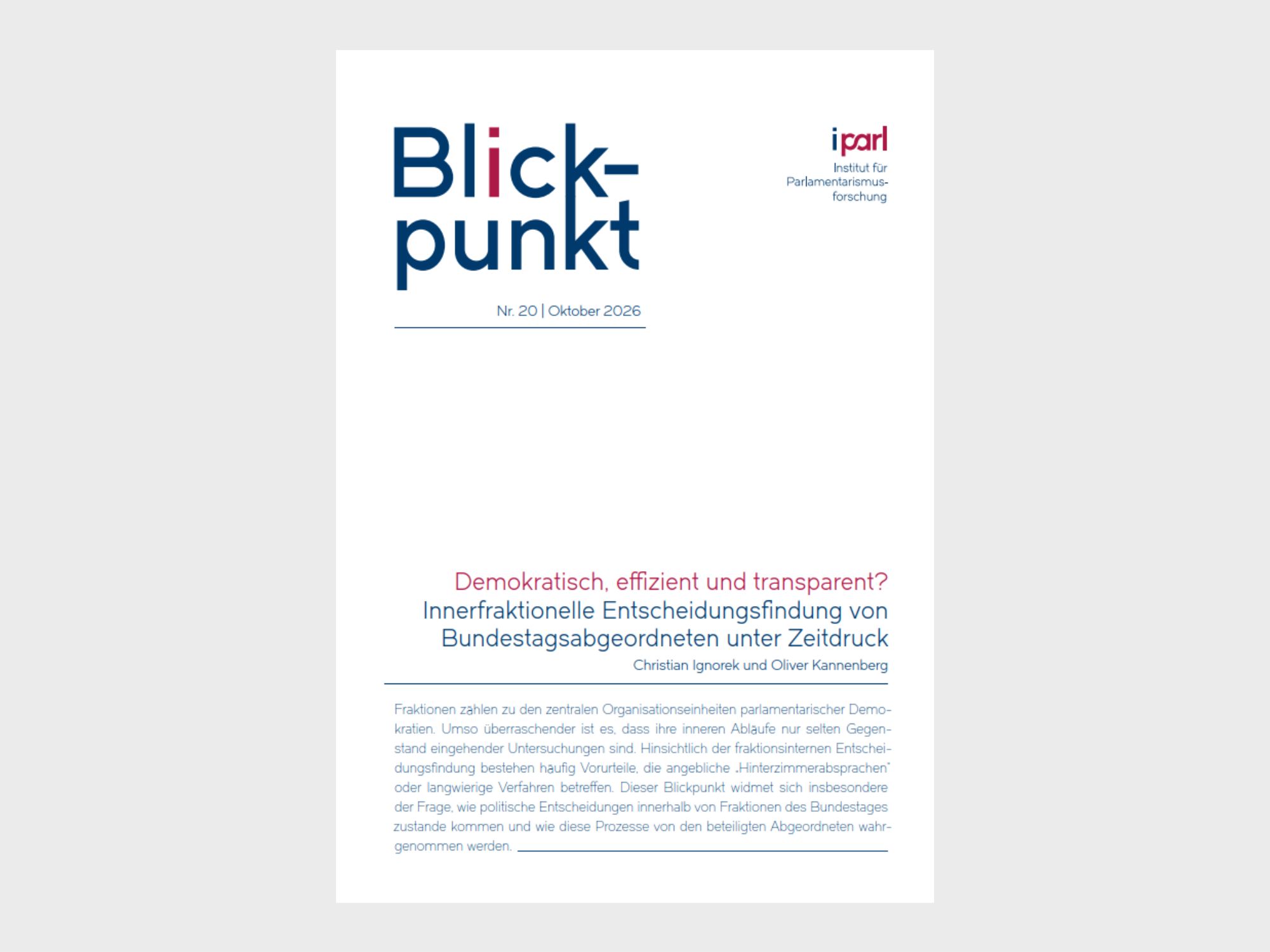
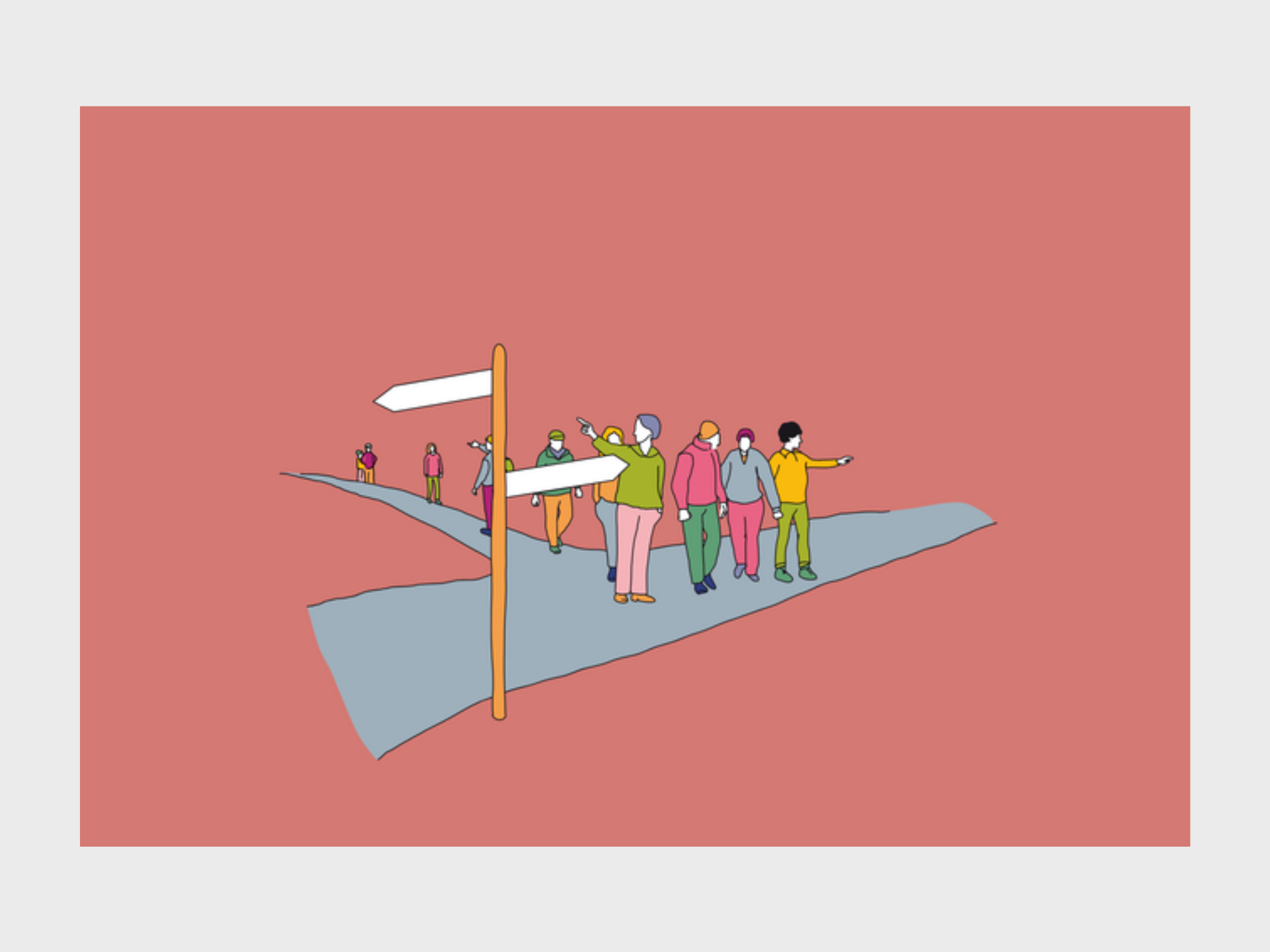
When it comes to decision-making within parliamentary groups, there are often preconceptions about so-called „backroom deals“
or involve protracted procedures. The Blickpunkt by Christian Ignorek and Oliver Kannenberg focuses in particular on the question of how political decisions are reached within parliamentary groups in the Bundestages and how these processes are perceived by the MPs involved.
How did legislation and the use of the right to ask questions develop during the 20th Bundestag (2021 to 2025)? Were there fewer and shorter legislative procedures? Did the extensive use of the right to ask questions, particularly in the form of minor questions, continue? What questioning strategies did the opposition parties pursue? Franziska Carstensen addresses these questions in an article for the volume on the Bundestag election of 2025, edited by Schiffers, von Schuckmann and Korte.
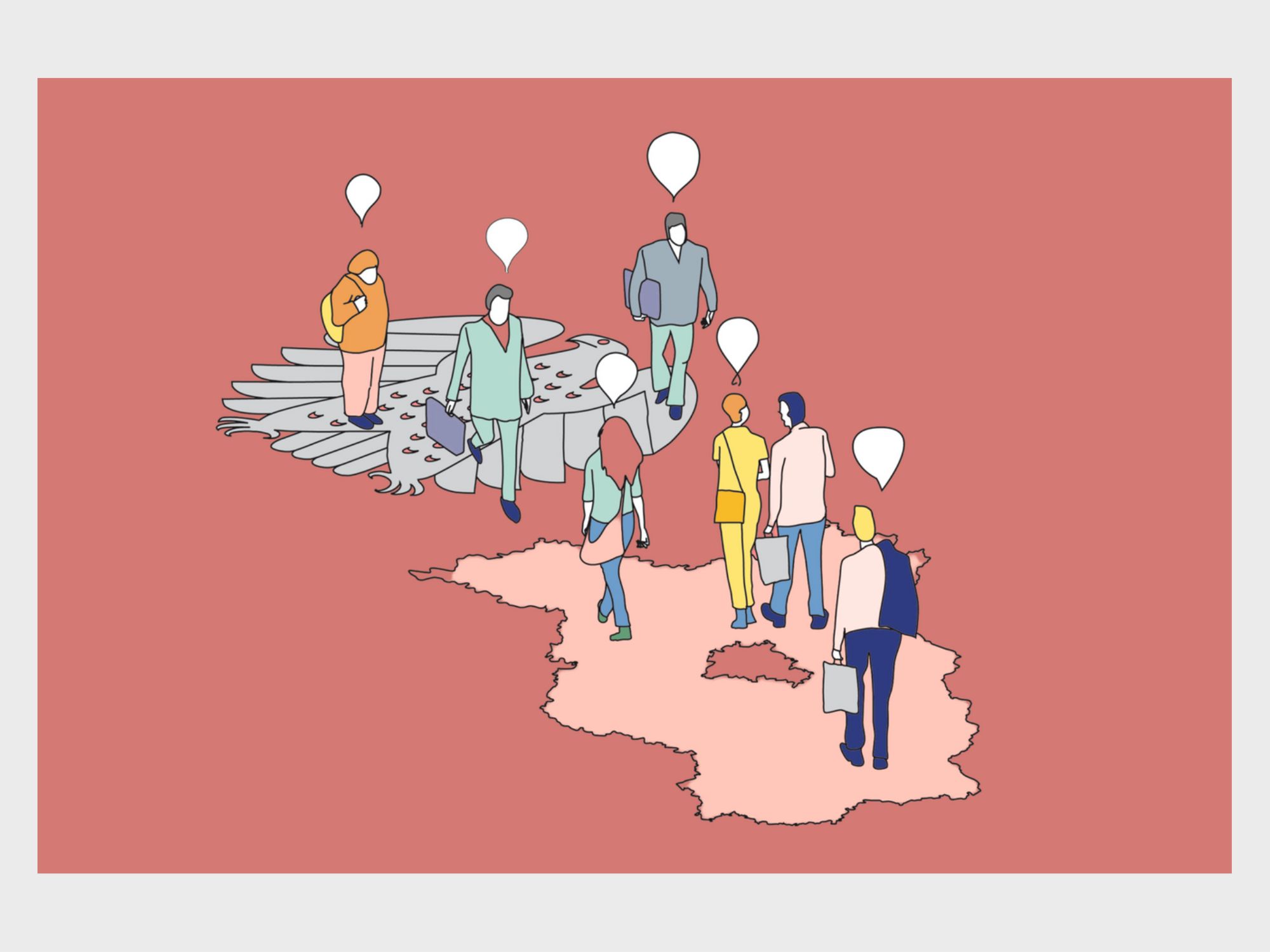
The Bundesrat is rarely in the spotlight, even though it plays a central role in the legislative process. The public perception is dominated by the notion that party interests and obstructionist tactics prevail there, and that votes are decided well in advance anyway. This article examines these and other claims and demonstrates that the Bundesrat is a relevant institution in the Federal Republic of Germany.
Since their inception, political parties have been met with considerable scepticism from society. To this day, certain opinions and prejudices persist. This article examines five common myths about political parties and argues for a more realistic and nuanced assessment of their role and how they operate.
Sign up to receive updates, promotions, and sneak peaks of upcoming products. Plus 20% off your next order.